

Rates move, and the rate you fixed two years ago suddenly looks expensive. Can you get out of it?
You can, but there's a break fee. Here's how it works, when paying it makes sense, and how to avoid it altogether.
What a break fee is
Your bank funds your fixed rate on the wholesale market. Leave early and it may have to re-lend that money for less; the break fee covers the gap. By law it must be a reasonable estimate of the bank's loss, not a penalty.
A rough rule of thumb: balance × drop in wholesale rates × years remaining, plus an admin fee. If wholesale rates have risen since you fixed, the fee is usually just admin, but your rate is probably cheaper than today's anyway. Get your bank's quote in writing.
When breaking comes out ahead
Breaking and refixing with the same bank often lands near break-even. The maths tips your way when something else is in play.
Illustrative figures only. Sam and Aroha owe $500,000 at 6.40% with 18 months left. Wholesale rates have dropped about 1% since they fixed, and a two-year rate today is 5.35%.
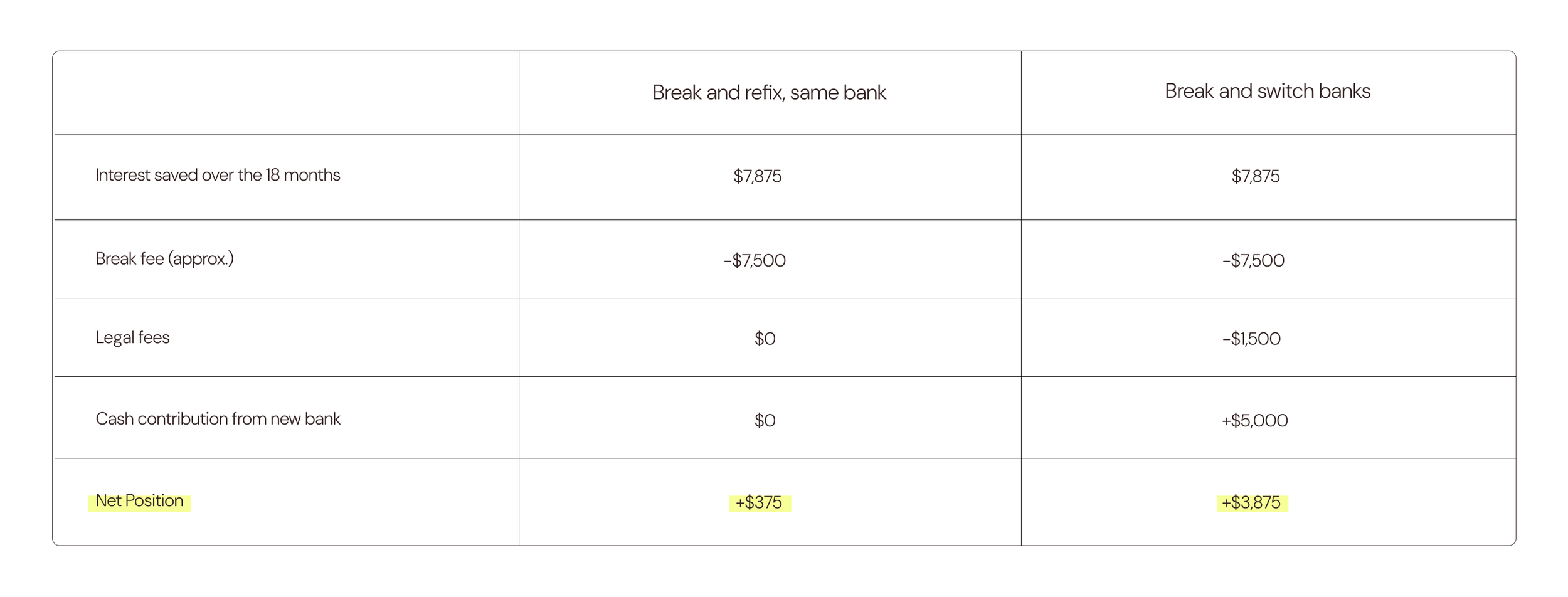
Breaking can make sense when a new lender covers most of the fee, you're restructuring or selling anyway, or you want a longer term before rates rise further. It rarely does with only a few months left, or when your rate is already at or below today's.
The costs people forget
Legal and valuation fees. Switching banks typically costs $1,000 to $2,000 in legal work, plus a valuation if the new lender wants one.
Cashback clawback. Cash contributions usually lock you in for two to four years. Leave early and you repay some or all of it.
Lost features. Offset or revolving credit, package discounts and a negotiated rate may not carry over.
How to avoid needing to break
Split your loan across two or three terms, with expiry dates six to twelve months apart.
Keep a floating or revolving portion for lump sums you can pay off with no fee.
Match the term to your plans. If you might sell within two years, a five-year fix is a break fee waiting to happen.
What to do 60–90 days before your term ends
90 days out: check your expiry date, rate and any clawback, then get an adviser to compare the market.
60 days out: lock in if it suits. ANZ, BNZ and Westpac allow up to 60 days early; ASB 35 days.
On expiry: don't drift. Do nothing and you roll onto floating, usually the most expensive option.
Coming off a fixed rate soon?
Get a review before the bank sends its letter. We'll compare your break fee quote against the market and tell you plainly if breaking, waiting or switching leaves you better off.
Talk to us about your mortgage review
This article is general information only and isn't financial advice. Rates, fees and lender policies change often and were current as at November 2026. Talk to an adviser about your situation before making changes to your loan.